If you are wondering whether Carlsbad feels like a true beach town, a practical suburban city, or something in between, the answer is: a little of both. For many buyers, that balance is exactly the appeal, especially if you want coastal access without giving up everyday convenience. Understanding how Carlsbad actually lives day to day can help you decide if it fits your routine, budget, and long-term goals. Let’s dive in.
Carlsbad lifestyle at a glance
Carlsbad stands out for its mix of coastline, open space, and everyday infrastructure. The city reports seven miles of beach and coastline, plus three distinct lagoons that add more than 1,000 acres of open space, trails, and water recreation.
That combination shapes daily life in a big way. You are not limited to a single beach strip or a small downtown area. Instead, you get a coastal city with room to spread out, run errands, commute, and still spend time outdoors without leaving town.
Outdoor living is part of daily life
In Carlsbad, outdoor time is not just a weekend plan. It is built into the city’s identity, from beach mornings to lagoon trails and casual after-work walks.
Beaches offer different ways to spend your time
Carlsbad’s coastline is divided into north Carlsbad beaches, Carlsbad State Beach, and South Carlsbad State Beach. South Carlsbad State Beach is known for swimming, surfing, picnicking, and bluff-top camping, while Carlsbad State Beach is a smaller beach area near Tamarack at the base of coastal bluffs.
For residents, that means the coast can fit a lot of different routines. You might head out for a surf session, meet friends for a beach day, or simply take in the ocean after work.
It is also helpful to know a few practical details. Most beaches are managed by California State Parks, and while leashed dogs are welcome on the trail system, dogs are not allowed on the beaches.
The lagoons add another layer of recreation
Carlsbad is the only city in California with three distinct lagoons, according to the city. That gives the area a very different feel from places where beach access is the only outdoor draw.
Each lagoon supports a different kind of use. Agua Hedionda allows boats, personal watercraft, and paddleboards, while Batiquitos includes a 1.3-mile public trail along its north shore.
If you like variety in your outdoor routine, this matters. Carlsbad offers both active coastal recreation and quieter trail and nature access, which can make daily life feel more balanced.
Carlsbad feels convenient, not isolated
Some coastal communities feel beautiful but limited when it comes to everyday errands. Carlsbad tends to feel more complete.
Carlsbad Village is the everyday hub
Carlsbad Village is the city’s main downtown commercial area. It serves as a central spot for restaurants, shopping, hotels, resorts, and direct access to the water.
For residents, that means downtown is not just for visitors. It can be part of your regular routine for coffee, meals, casual shopping, and quick stops close to the coast.
That village-centered setup is one reason Carlsbad often appeals to buyers relocating within San Diego County or moving from out of area. You get a downtown presence without the feel of a dense urban core.
Shopping and daily services are easy to access
Beyond the Village, Carlsbad has several major retail and service areas. The Shoppes at Carlsbad, The Forum Carlsbad, Carlsbad Premium Outlets, and the State Street Farmers’ Market all add to the city’s everyday convenience.
Together, these spots support more than occasional shopping. They help make Carlsbad feel like a coastal suburb with real day-to-day functionality, not a small beach town where you constantly have to leave the area for basics.
Getting around in Carlsbad
Carlsbad is still largely a driving-first city, but it offers more transportation options than many coastal suburbs. If commute and mobility matter to you, that is an important part of the picture.
Driving still plays a big role
Regional access is shaped by Interstate 5 and State Route 78. SR-78 provides east-west access into Carlsbad, and the I-5 corridor is a major part of the broader regional transportation network.
For many residents, that means driving is still the default for work, school, shopping, and weekend plans. Census QuickFacts reports a mean one-way travel time to work of 27.1 minutes, which gives a useful general sense of commuting in the area.
Rail access is a real advantage
One of Carlsbad’s stronger lifestyle perks is its rail access. The North County Transit District says the city has two COASTER stations, Carlsbad Village and Carlsbad Poinsettia.
The Village station sits in the heart of downtown and about a quarter mile from the ocean. NCTD also reports year-round COASTER service with 30 daily trips on weekdays, 22 on Saturdays, and 18 on Sundays.
If you want a coastal city with some practical transit options, that can be a meaningful advantage. It gives you another way to connect to the region without relying only on your car.
Air travel is close by
McClellan-Palomar Airport is located in Carlsbad and operated by the County of San Diego. The city describes it as serving charter and air taxi service along with limited commercial airline operations.
That will not replace major airport travel for most people, but it does add another layer of access that some residents value, especially for regional business or convenience.
What the housing mix looks like
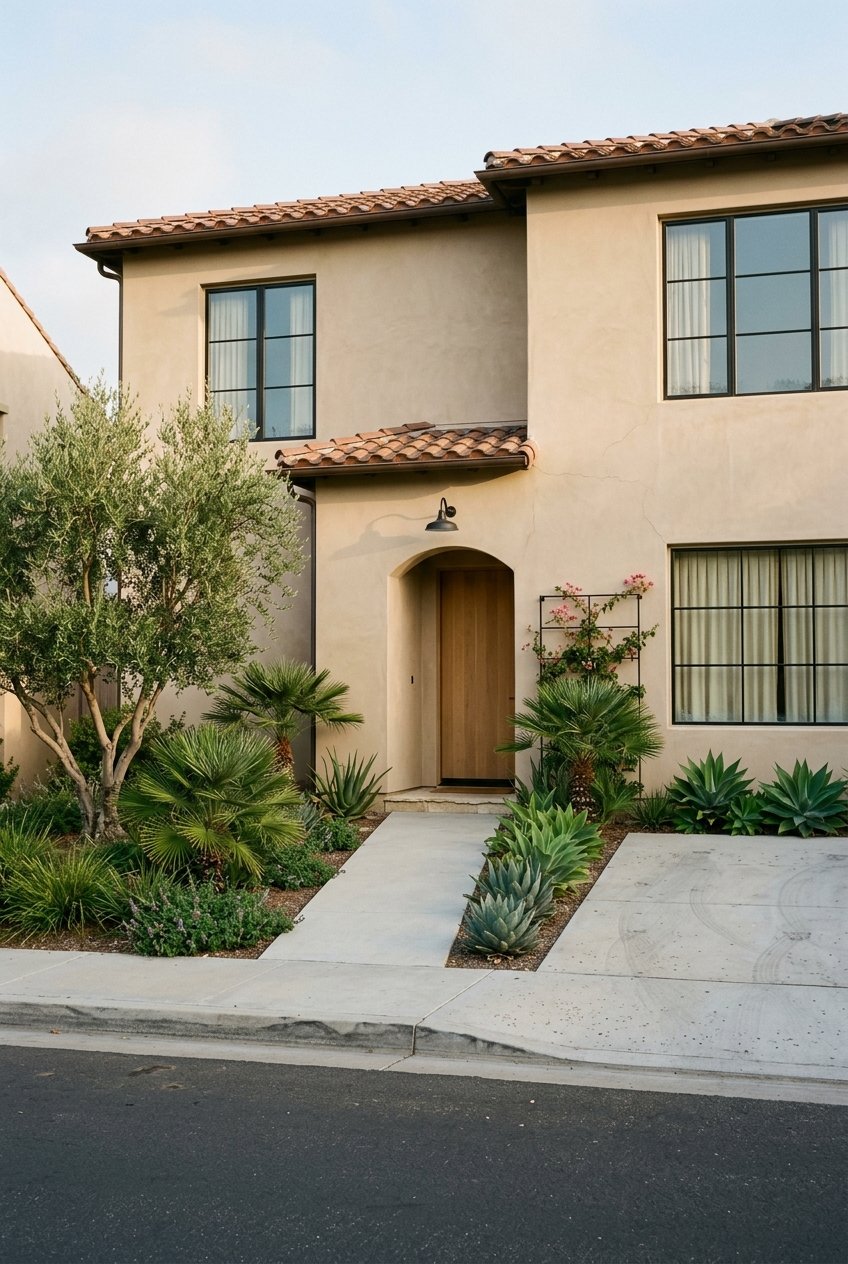
Carlsbad is not a one-style housing market. That matters if you are trying to match your budget and lifestyle to the right part of the city.
Detached homes lead, but options are broader than many expect
According to the city’s 2023 housing data, Carlsbad has 48,066 total housing units. That includes 23,289 detached single-family homes, 9,002 attached single-family homes, 14,458 multifamily units, and 1,317 mobile homes.
So while detached homes are the largest category, condos, townhomes, and apartment-style housing are also a meaningful part of the market. If you are moving up, downsizing, relocating, or buying your first home in North County Coastal, that range gives you more ways to enter the city than you might assume.
Prices reflect a premium coastal market
Carlsbad is not an entry-level market. Census QuickFacts reports a median owner-occupied home value of $1,156,900 for 2019 through 2023.
More recent market snapshots also show premium pricing. Zillow’s March 2026 data shows an average home value of $1,370,649 and a median sale price of $1,479,000, while Redfin reports a March 2026 median sale price of $1.6 million. Zillow also shows average rent around $3,446 per month.
For buyers, the key takeaway is not just that Carlsbad is expensive. It is that pricing varies across the city, and the right fit often depends on how you weigh home type, location, and access to the coast or other amenities.
Neighborhood prices vary significantly
Carlsbad is not a single-price market. Zillow’s neighborhood-level figures show roughly $1.14 million in Rancho Carlsbad and Sunny Creek, around $1.20 million in City Center, about $1.39 million in Poinsettia, about $1.82 million in Bressi Ranch, about $1.87 million in Robertson Ranch, around $1.98 million in Aviara, and about $2.10 million in La Costa Greens.
That spread matters if you are comparing trade-offs. Beach proximity, neighborhood age, and housing type can all influence value, so it helps to look at Carlsbad as a collection of different lifestyle pockets rather than one uniform market.
How Carlsbad compares nearby
Within North County Coastal, Carlsbad sits in an interesting middle position. Based on Zillow’s March 2026 average home values, it is below Encinitas, Solana Beach, and Del Mar, but above Oceanside.
That means Carlsbad is still firmly a premium coastal market, yet often more attainable than some of the region’s highest-priced ocean-adjacent cities. For many buyers, that middle-ground position is part of the draw.
You are paying for coastal access, established amenities, and a strong lifestyle offering. At the same time, the city’s broader housing mix can create more entry points than in some nearby communities with less variety.
Who Carlsbad tends to fit best
Carlsbad often works well for buyers who want lifestyle and practicality in the same place. If you want beaches, trails, lagoon access, a real downtown area, major shopping nodes, and regional commuting options, the city covers a lot of ground.
It can be especially appealing if you are relocating and want a coastal setting that still feels organized and functional for daily life. It can also make sense if you are moving up and looking for more space while keeping access to North County Coastal amenities.
The main trade-off is price. Carlsbad offers a lot, but you will want to be clear on your budget, preferred home type, and which parts of the city best support your routine.
If you are thinking about a move to Carlsbad, the right strategy starts with matching your daily lifestyle to the right pocket of the city. Whether you are relocating, moving up, or trying to coordinate a sale and purchase at the same time, Emily Benito can help you compare options and make a confident plan.
FAQs
What is daily life like in Carlsbad, California?
- Daily life in Carlsbad often centers on a mix of coastal recreation, neighborhood errands, shopping, dining, and commuting, with beaches, lagoons, trails, and Carlsbad Village all playing a role.
Is Carlsbad, California, a walkable beach town?
- Parts of Carlsbad, especially around Carlsbad Village, offer a more walkable coastal experience, but the city overall is still largely driving-first.
How expensive is it to live in Carlsbad, California?
- Carlsbad is a premium housing market, with Census QuickFacts reporting a median owner-occupied home value of $1,156,900 and more recent 2026 market snapshots showing typical sale pricing higher than that.
What types of homes are available in Carlsbad, California?
- Carlsbad includes detached single-family homes, attached homes, multifamily housing, and mobile homes, so buyers can find a broader range of housing types than they might expect in a coastal market.
Does Carlsbad, California, have public transportation?
- Yes. Carlsbad has bus, train, and shuttle service through the North County Transit District, including two COASTER stations: Carlsbad Village and Carlsbad Poinsettia.
How does Carlsbad, California, compare to other North County Coastal cities?
- Carlsbad generally sits in the middle of the North County Coastal price range, typically below Encinitas, Solana Beach, and Del Mar, but above Oceanside, while still offering a broad housing mix and strong everyday amenities.